What is mindful Eating?
Mindful eating is positioned as a way of supporting weight loss by shifting attention away from control and toward understanding. Rather than relying on rigid rules, calorie targets, or constant restraint, it invites people to slow down and notice what is actually happening in their body and mind when they eat. By paying closer attention to hunger, fullness, satisfaction, and emotional cues, eating becomes more responsive and less automatic. This awareness can gently interrupt patterns such as overeating when distracted, eating past fullness, or eating primarily in response to stress – patterns that often sit underneath weight gain.
Over time, this approach supports weight loss by rebuilding trust in internal cues rather than overriding them. When people learn to recognise genuine hunger, stop when comfortably full, and choose foods that are both nourishing and satisfying, eating tends to regulate itself more naturally. Importantly, mindful eating reduces the cycle of restriction and rebound that commonly undermines weight-loss efforts. While changes may be slower, they are often more sustainable because they are grounded in awareness, self-compassion, and a clearer understanding of personal eating patterns.
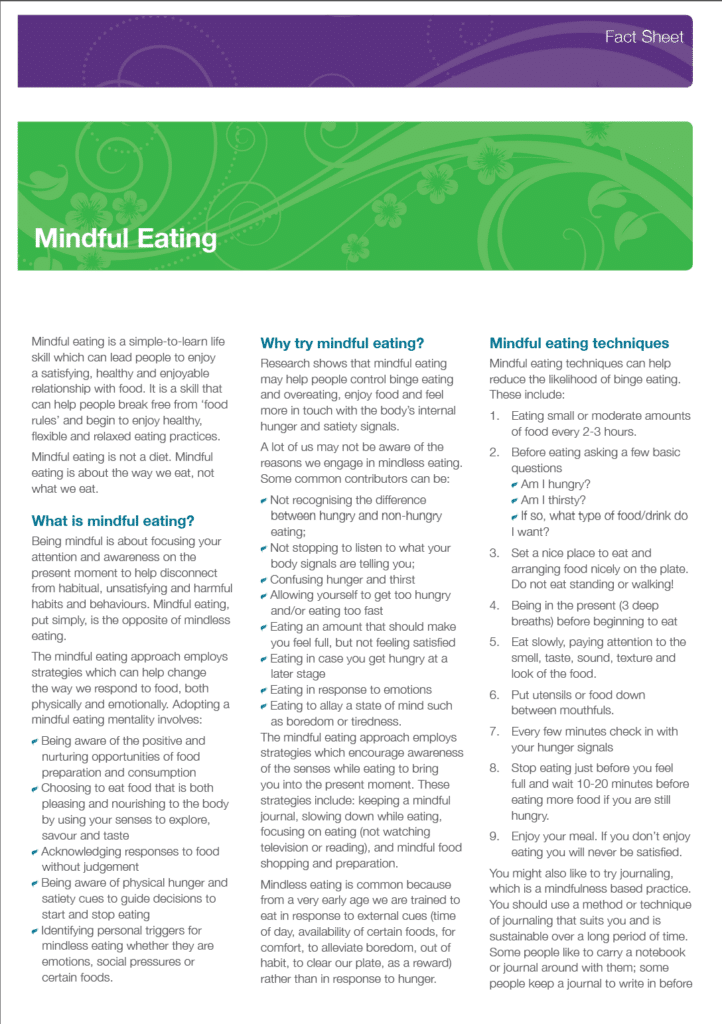
Examples of mindful eating practices highlighted in the resource include:
Noticing physical hunger and fullness cues before, during, and after eating
Eating more slowly and with fewer distractions (such as screens or multitasking)
Paying attention to the sensory experience of food, including taste, texture, smell, and satisfaction
Observing thoughts and emotions around food without judgement, such as guilt, urgency, or comfort-seeking
Pausing to check in with the body during a meal rather than eating on autopilot
Recognising non-hunger reasons for eating and responding with care rather than control